
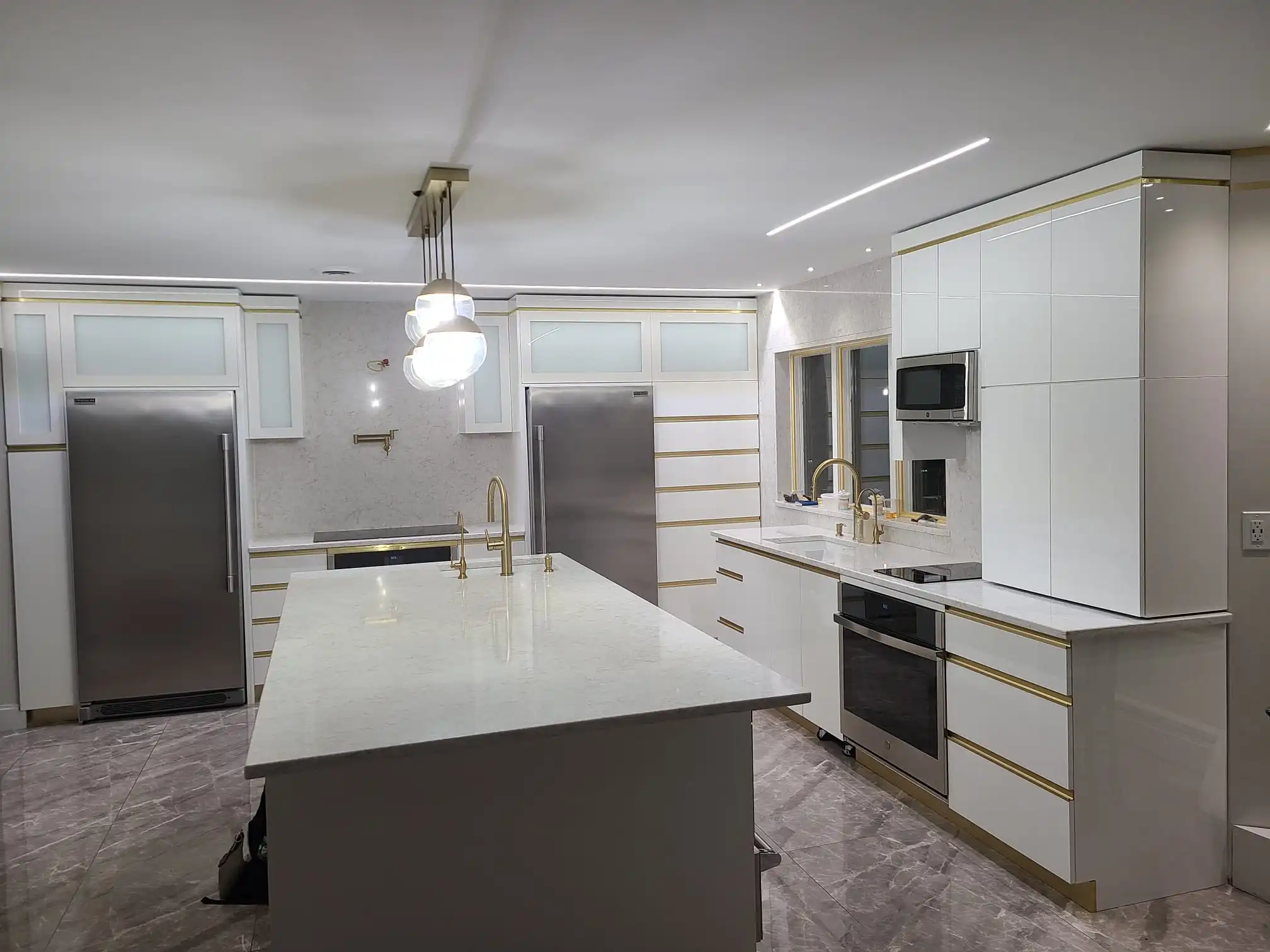
You’ve signed off on a beautiful kitchen design, the bids come back, and the cabinet line item is far higher than you planned. This happens on multifamily developments and single-family remodels alike.
The answer is rarely to buy cheap cabinets. It is value engineering: a structured way to bring costs down while protecting what matters, which is how the kitchen looks, performs and lasts.
This guide explains what value engineering means for kitchen cabinets, where the savings usually come from, and how to do it without regretting it five years later.
What Is Value Engineering in Cabinetry?
Value engineering means reviewing a project’s specification and finding ways to get the same function and appearance for less money. It is not about stripping features or downgrading quality.
For kitchen cabinets, that means asking questions like:
- Does every cabinet in the spec need to be a custom size?
- Is there a comparable style or finish that costs less?
- Can the layout be adjusted to use standard dimensions and cut waste?
- Are we paying for features this project will never use?
Done well, the finished kitchen looks the same to the people living in it. The difference shows up in your budget.
Where the Savings Usually Come From
1. Door Style and Finish
Door style is one of the biggest cost drivers. A detailed profile or specialty finish can cost far more than a clean shaker-style door in a durable, well-chosen finish. Often, two styles look very similar once installed, but their prices are not close.
What to ask: Is there a style that delivers the same look at a lower price point?
2. Standardizing Sizes and Layouts
Custom dimensions add cost. Where a layout can be adjusted slightly to use standard cabinet sizes, you save on both materials and lead time. This matters most on multifamily projects, where the same kitchen is repeated across dozens or hundreds of units. A small saving per kitchen adds up quickly.
What to ask: Can we simplify the layout to use more standard sizes without hurting function?
3. Smart Material Choices
Not every part of a cabinet needs the premium material. Cabinet boxes, interiors and visible surfaces can be specified differently. Choosing the right material for each part keeps durability where it counts, such as in moisture-prone areas around the sink, and avoids overspending where it doesn’t.
What to ask: Where does a higher-grade material actually matter, and where is it unnecessary?
4. Hardware and Accessories
Pulls, hinges, drawer systems and organizers can add up fast. Quality hinges and drawer slides are worth keeping, since residents use them every day. Decorative extras and rarely used accessories are often the easier place to trim.
What to ask: Which upgrades will be used daily, and which are nice to have?
5. Bundling Cabinets, Countertops and Installation
Coordinating cabinets, countertops and installation under one partner reduces the mismatches, delays and finger-pointing that come from managing several vendors. Fewer handoffs mean fewer costly mistakes.
What You Should Never Cut
Value engineering fails when it becomes simple cost-cutting. Protect these areas:
- Construction quality. Sturdy boxes and solid joinery determine how long the kitchen lasts.
- Accurate measuring. Poor measurements cause expensive rework and delays.
- Moisture-sensitive areas. Cabinets near sinks and dishwashers need materials that can handle it.
- Installation quality. Even excellent cabinets look bad if they’re installed poorly.
A lower price that causes callbacks, replacements or unhappy residents costs more in the end.
Why It Matters Even More for Multifamily Projects
For developers, owners and property management companies, cabinets are a high-volume purchase. A small improvement per unit multiplies across the whole building. Dependable delivery matters just as much as price, because cabinet delays can hold up turnover, move-in dates and revenue.
That’s why the best approach combines three things: a smart spec, reliable timelines and clear communication from the first call to the final install.
For Homeowners: Getting the Kitchen You Want on Your Budget
If you’re remodeling a single-family kitchen, the same principles apply on a smaller scale.
- Set your budget early. Know your ceiling before you pick styles.
- Decide what matters most. Maybe it’s soft-close drawers, a specific door style or extra storage. Spend there, and save elsewhere.
- Be open to alternatives. A similar-looking style at a lower price is often available.
- Get a full plan. Measurements, design, materials and installation planned together prevent surprise costs.
How Core Cabinetry Approaches It
At Core Cabinetry, value engineering is part of the process, not an afterthought. Our turnkey approach covers:
- Consultation: We talk through your project, styles, scope and budget.
- Site measuring: We measure every space on site so everything fits the first time.
- Drafting and design: We plan the layout, source your cabinet styles and value engineer the spec to keep costs down.
- Delivery and installation: Cabinets and countertops are delivered and installed by our team, on schedule.
We carry a wide range of cabinet styles, and if we don’t have the look you want, we’ll source it. We serve multifamily projects nationwide, and homeowners across New Jersey, New York, Pennsylvania and Connecticut.
Final Thoughts
Going over budget doesn’t mean compromising on the kitchen. With the right review of styles, sizes, materials and layout, you can often cut costs meaningfully while keeping the quality your residents or family will notice every day.
If your project is specced over budget, the best time to talk to us is before you order.